
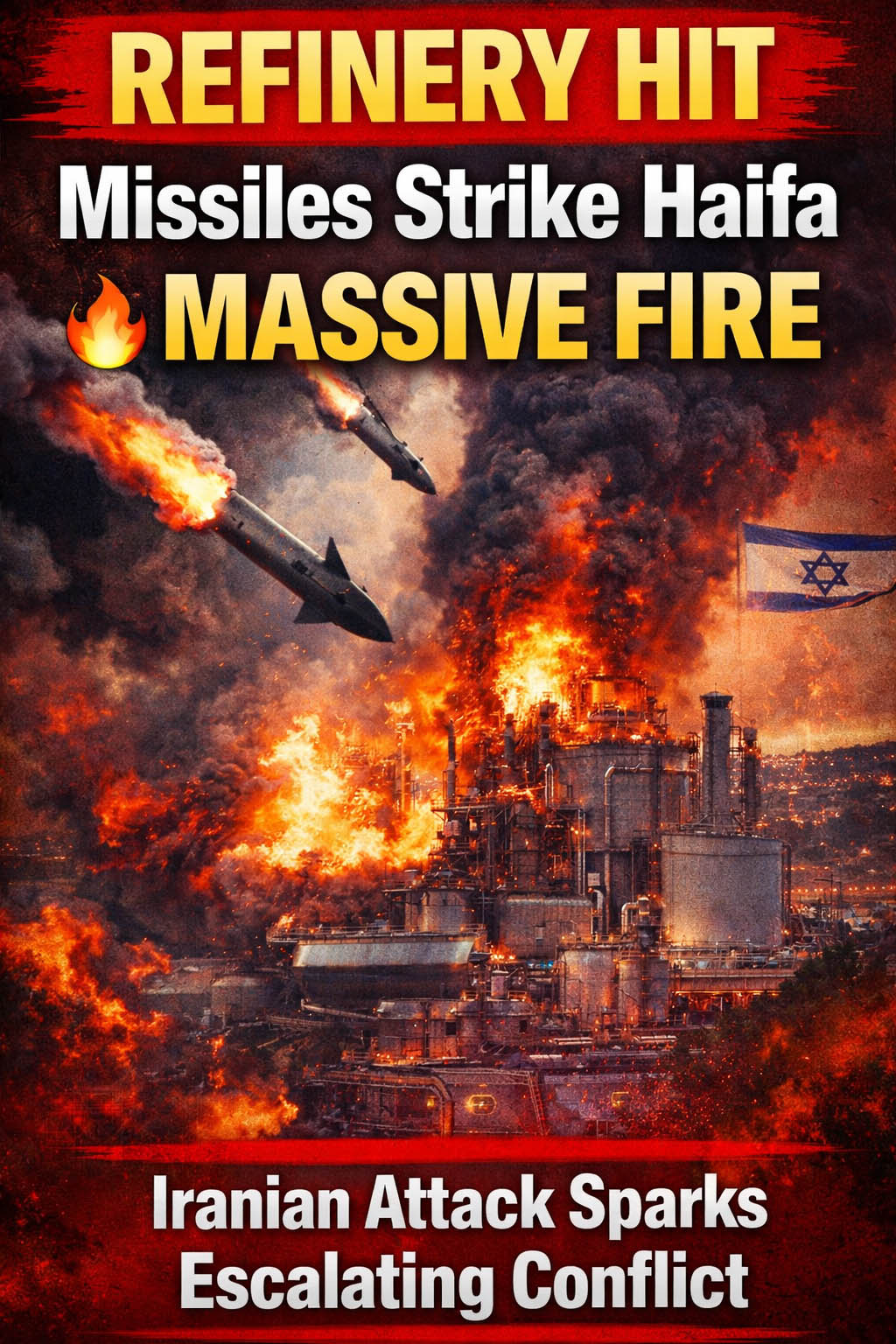
Iranian Missile Barrage Hits Israel’s Haifa Oil Refinery, Sparking Fire Amid Escalating Conflict
Jerusalem — Iranian missiles struck Israel’s largest oil refinery complex in the northern port city of Haifa on March 30, 2026, triggering a significant fire and raising fresh concerns about the vulnerability of critical energy infrastructure in the ongoing U.S.-Israeli campaign against Iran.
The attack targeted the Bazan Group (also known as Oil Refineries Ltd.) facility, which supplies roughly half of Israel’s domestic fuel needs. Thick black smoke billowed from the site as firefighters worked to contain flames that erupted after debris from an intercepted missile — or possibly a direct impact — struck an industrial building and a fuel tanker within the complex. Israeli authorities reported no casualties from the refinery incident itself, though the blaze was the second time the facility has been hit during the monthlong war.
Israel’s military confirmed it detected a fresh salvo of ballistic missiles fired from Iran, with additional rockets launched simultaneously from Hezbollah positions in Lebanon. The coordinated barrage produced multiple impact sites across the Haifa region. Israel’s multi-layered air defenses intercepted most incoming projectiles, but falling debris and at least one strike caused the fire at the refinery.
Retaliation in an Energy War
The strike on Haifa comes as Tehran retaliates for repeated U.S. and Israeli attacks on Iranian energy infrastructure, including strikes on the South Pars natural gas field and other petrochemical sites. Iran’s Islamic Revolutionary Guard Corps has publicly claimed responsibility for targeting Israeli refineries in Haifa and Ashdod, describing the operations as precise hits on “Zionist regime” military and economic support centers.
This latest incident marks the second confirmed attack on the Haifa refinery in recent weeks. An earlier Iranian missile strike on March 19 caused minor damage and brief power disruptions but was quickly repaired. Israeli Energy Minister Eli Cohen stated at the time that there was “no significant damage.” The repeated targeting underscores Iran’s strategy of striking back at Israel’s energy sector in response to assaults on its own oil and gas facilities.
Limited Damage but Heightened Risks
Israeli officials and the Bazan Group confirmed that emergency teams contained the fire relatively quickly. No hazardous chemical leaks were immediately reported, and operations at the refinery were not fully halted. However, the attack highlights the strategic importance of Haifa’s industrial zone, which includes major refineries, chemical plants, and port facilities.
Local residents in Haifa and surrounding areas were instructed to remain in shelters as sirens sounded across northern Israel. The Israeli military also reported separate incidents, including an IDF soldier killed in southern Lebanon during related clashes with Hezbollah.
Broader Regional Implications
The Haifa refinery attack adds to mounting tensions in the Middle East. With the United States deeply involved in strikes against Iran and France recently deploying its aircraft carrier Charles de Gaulle to the Mediterranean, the conflict risks further escalation. Energy markets remain sensitive, as disruptions to Israeli refining capacity could affect regional fuel supplies, even if the immediate impact appears contained.
President Donald Trump has previously vowed strong responses to Iranian aggression, describing any attacks on allied infrastructure as unacceptable. Israeli Prime Minister Benjamin Netanyahu is expected to address the latest strikes, with Israeli defense officials signaling that the campaign against Iranian and proxy targets will continue.
As both sides trade blows focused on energy infrastructure, the war — which began with U.S.-Israeli Operation Roaring Lion / Epic Fury — shows no immediate signs of de-escalation. Analysts warn that repeated targeting of refineries and oil hubs could lead to longer-term supply challenges and environmental risks if fires or damage worsen in future attacks.
For now, Israeli authorities say the situation at the Haifa refinery is under control, but the incident serves as a stark reminder of how the conflict has expanded to include direct strikes on strategic civilian-economic targets on both sides.