
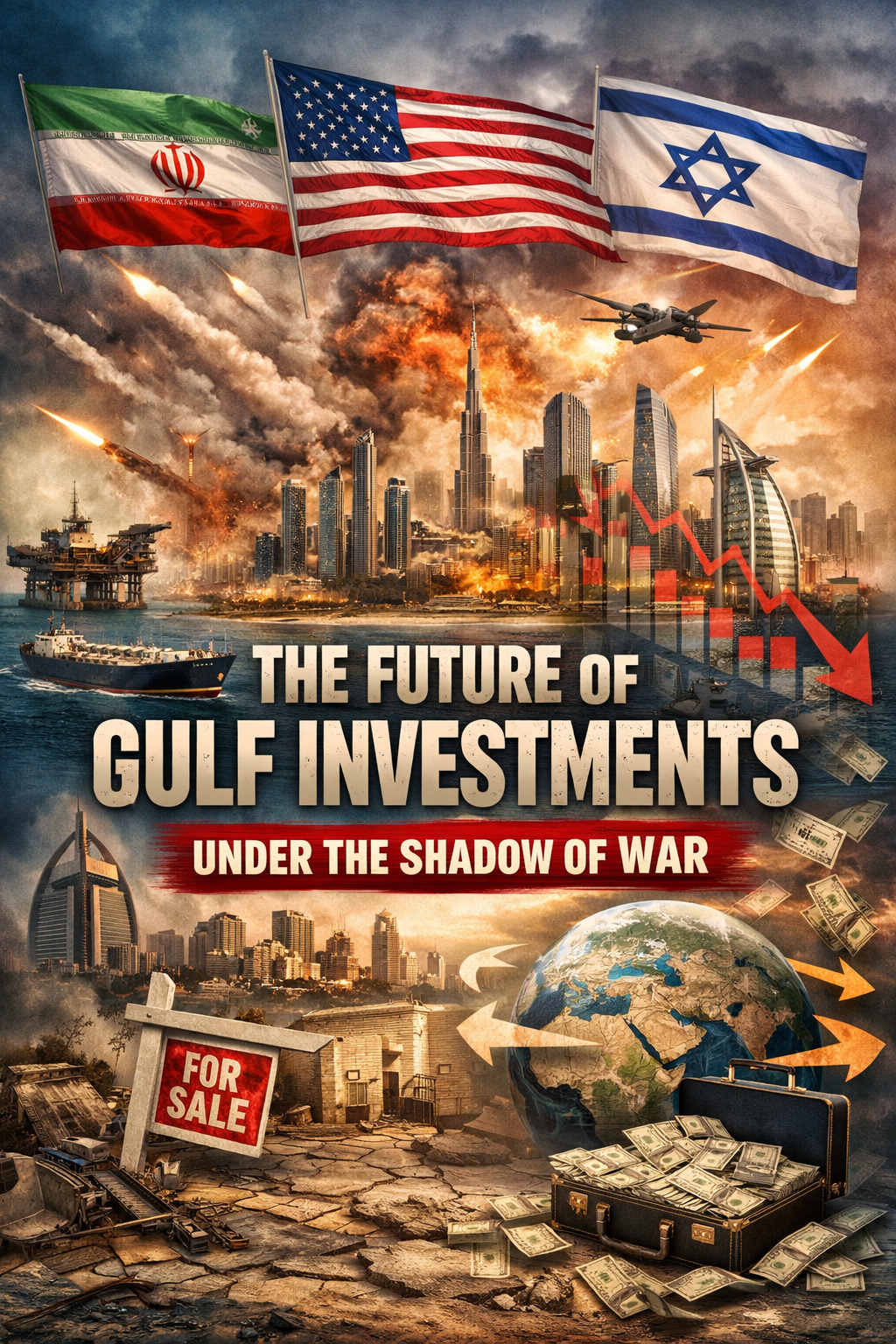

The ongoing tensions and conflict involving Iran, Israel, and the United States have delivered several hard lessons to the world. One of the most important realizations is the strategic and economic significance of Iran in the Gulf region. The recent developments have once again demonstrated that if Iran becomes hostile or faces direct military pressure, its capacity to disrupt regional stability—and by extension global markets—is far greater than many policymakers previously assumed.
Countries that depend heavily on imported oil, international shipping routes, and maritime trade have already begun to feel the ripple effects of these tensions. However, this article does not focus on Iran’s military capabilities or geopolitical power. Instead, it examines a different but equally important question: how these developments could reshape the future of investment in the Gulf region.
Power Built on Oil
About two decades ago, the massive oil reserves of the Gulf region attracted intense geopolitical interest from major global powers. Control over energy resources became a central objective of international strategy. Apart from Iran and Iraq, most Gulf nations lacked strong independent military capabilities. This vulnerability created an opportunity for the United States to establish a dominant security presence in the region.
Under security agreements and defense partnerships, the United States built military bases across several Gulf states, including Saudi Arabia, Qatar, and the United Arab Emirates. Advanced missile defense systems, naval infrastructure, and strategic ports were developed to protect the region from external threats and secure vital oil supply routes.
With the assurance of military protection and the steady flow of oil revenue, Gulf economies rapidly transformed into some of the wealthiest in the world. Recognizing the long-term risks of relying solely on oil, many of these countries began diversifying their economies. They invested heavily in real estate, tourism, global finance, and international trade. Cities such as Dubai and Doha emerged as global investment hubs, attracting billions of dollars in foreign capital.
The Hidden Fragility Behind the Glitter
Yet recent developments have exposed a vulnerability behind the region’s glittering economic growth. Missile and drone attacks linked to Iran’s regional responses have raised serious questions about the effectiveness of the security systems that were once believed to be nearly impenetrable.
If geopolitical tensions escalate or persist over a longer period, the most immediate consequence will not be military—it will be financial psychology.
In global finance, there is a fundamental rule: capital flows toward stability and away from uncertainty. When political and military risks increase, long-term investments become difficult to sustain.
Real Estate: The Most Exposed Sector
The Gulf region’s most heavily invested sector is real estate. Millions of international investors have poured billions of dollars into luxury residential towers, commercial complexes, and large-scale tourism projects.
However, real estate markets are extremely sensitive to geopolitical instability. If investors begin to perceive the region as unsafe or unpredictable, they may rapidly withdraw their capital. Such an exodus could trigger sharp declines in property values, stalled development projects, and severe stress in the construction sector.
History repeatedly shows that economies that grow extremely fast can also experience equally dramatic corrections when external shocks occur.
Currency and Financial Market Risks
Another potential consequence is instability in regional currencies and financial markets. If global investors start pulling funds out of Gulf economies, the pressure on local banking systems could intensify.
Large institutional investors, sovereign wealth funds, and multinational corporations may be forced to reassess their portfolios and risk exposure. As a result, stock markets across the region could face significant volatility.
Capital Migration: A New Opportunity Elsewhere
Global capital has a unique characteristic—it never disappears; it simply relocates.
If the Gulf region begins to appear risky for long-term investment, large volumes of capital may shift toward countries offering greater political stability and security. Emerging economies across Asia, Africa, and Southeast Asia could become attractive alternatives.
Smaller nations with open investment policies, political stability, and strong tourism potential may find themselves in a position to attract the very capital that once flowed almost exclusively into the Gulf.
A Lesson for the Global Economy
The broader lesson from this situation is clear: wealth is not sustained by natural resources alone; it is sustained by stability and trust.
Oil wealth helped create extraordinary prosperity in the Gulf. But maintaining that prosperity requires more than economic planning—it requires regional stability, geopolitical balance, and long-term security.
Today, the Gulf region stands at a critical crossroads. The future could move in one of two directions: prolonged instability under the shadow of conflict, or a recalibration of global investment flows leading to the rise of new economic centers.
The decisions made in the coming years may ultimately determine which path the region—and the global economy—will follow.