
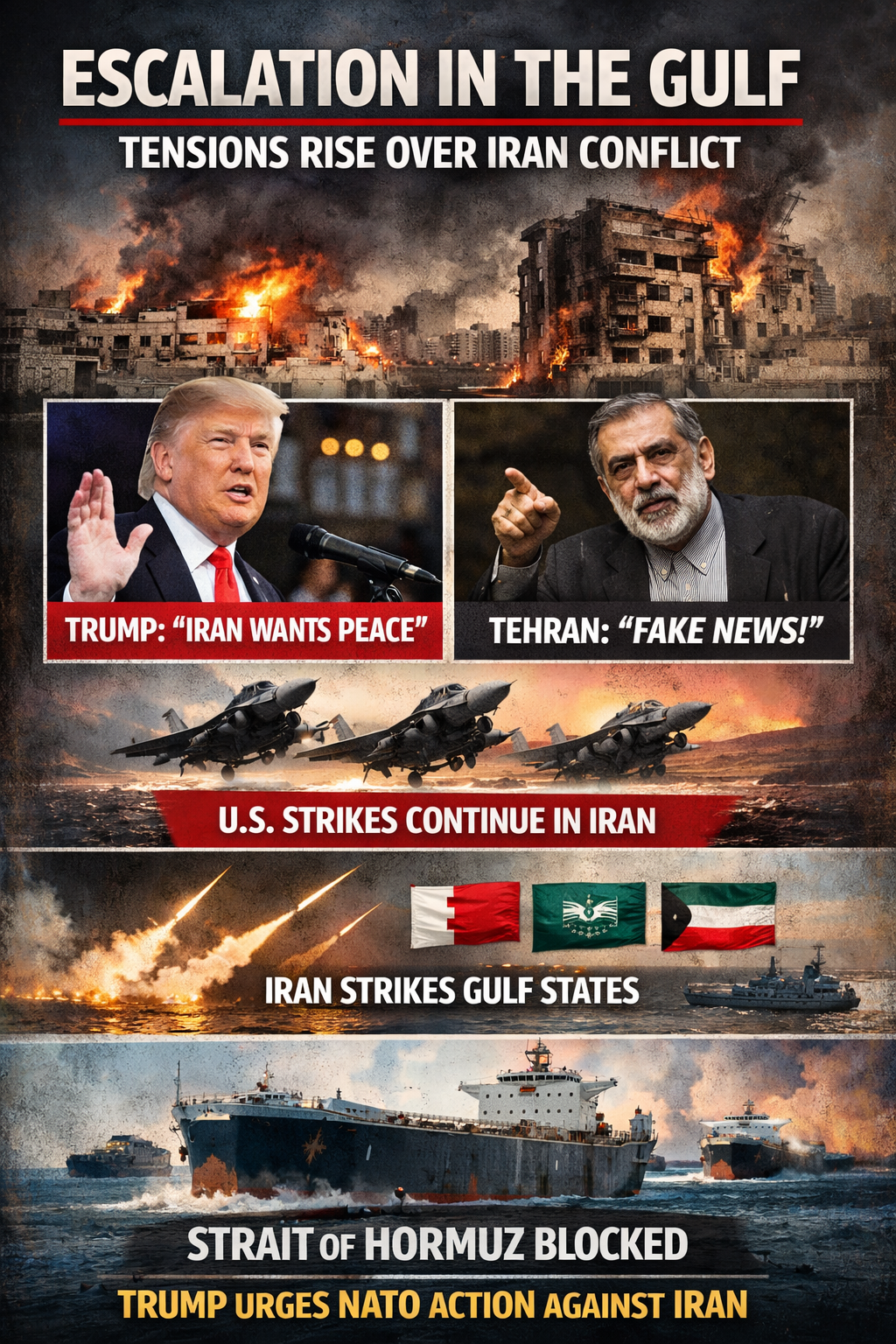
The geopolitical situation in the Middle East has entered a highly volatile phase following a series of missile strikes attributed to Iran targeting key locations in Tel Aviv. The attacks reportedly caused significant structural damage across multiple areas and resulted in at least four casualties, intensifying concerns about a broader regional conflict.
Conflicting Signals on Diplomacy
Amid the escalating violence, Donald Trump stated that discussions with Iran are ongoing, suggesting a possible diplomatic opening. According to him, Iran appears willing to negotiate a broader agreement, indicating a potential shift toward de-escalation.
However, officials in Tehran have strongly denied these claims. Iran’s parliamentary leadership dismissed the reports as “fake news,” alleging that such statements are being strategically circulated to influence global financial and oil markets. This sharp contradiction highlights the deep mistrust and information warfare surrounding the conflict.
Military Actions Continue Unabated
Despite diplomatic rhetoric, the military situation remains aggressive. United States Central Command confirmed that American forces are continuing targeted strikes against Iranian positions. These operations underscore that, on the ground, hostilities are far from easing.
Simultaneously, Iran has intensified its offensive posture. Missile and drone strikes have reportedly targeted multiple Gulf nations, including Bahrain, Saudi Arabia, and Kuwait, raising fears of a wider regional war that could draw in additional actors.
Strategic Moves and Global Implications
In a significant escalation, Iran is reported to have restricted access through the Strait of Hormuz—a critical chokepoint for global oil shipments. Notably, exceptions are reportedly being made for vessels linked to China and Russia, signaling a clear geopolitical alignment and the emergence of competing global blocs.
Meanwhile, President Trump is said to be engaging with NATO allies, seeking broader support for coordinated action against Iran. Such a move, if formalized, could mark a turning point—transforming a regional confrontation into a multi-national military engagement.
The current trajectory of events suggests a dangerous convergence of military escalation, diplomatic ambiguity, and strategic economic maneuvering. With conflicting narratives, ongoing strikes, and shifting alliances, the risk of a prolonged and expanded conflict remains high.
Global markets, particularly energy, are already reacting to the uncertainty. The coming days will be critical in determining whether diplomatic channels can prevail—or whether the region moves closer to a wider war with global consequences.