
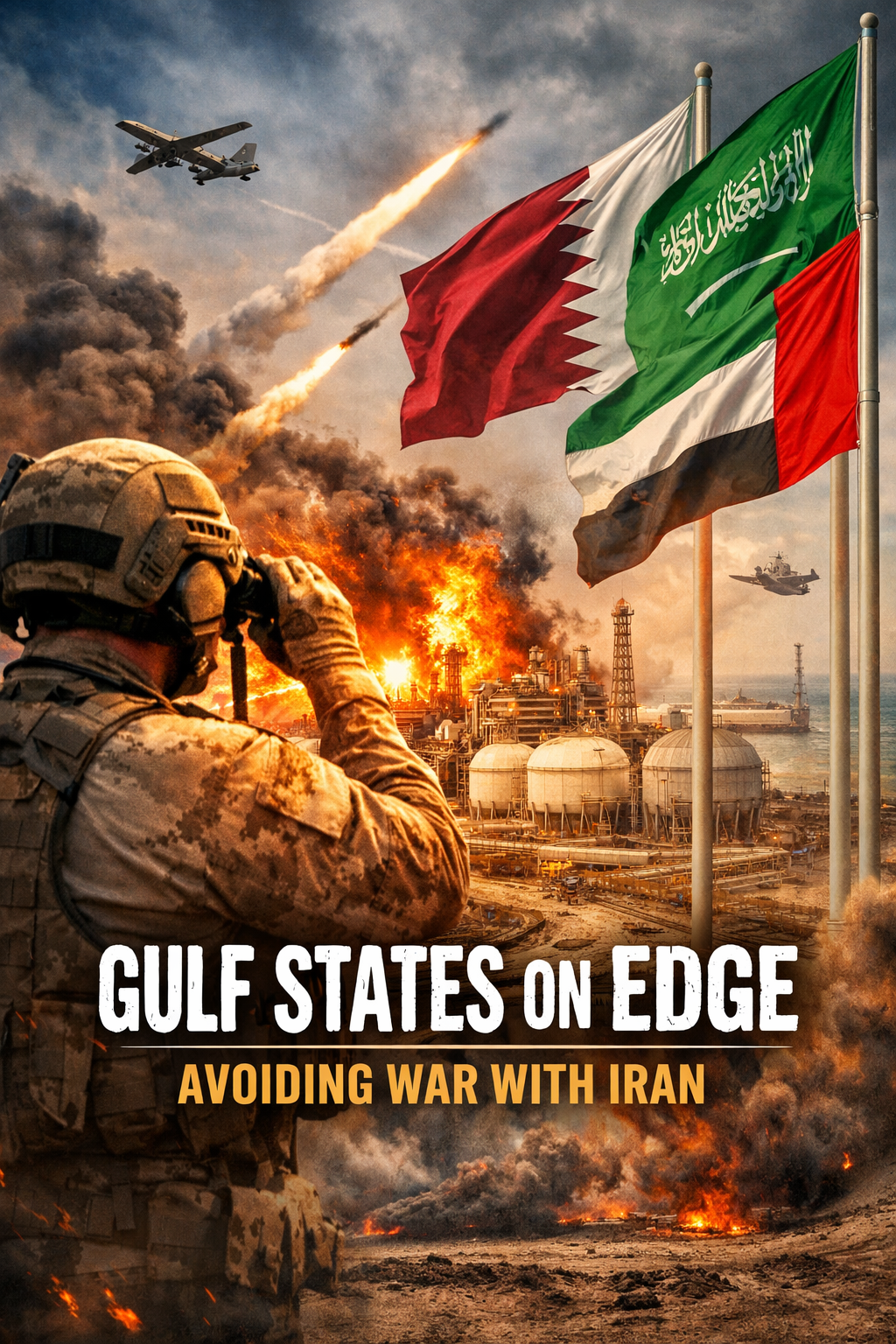
As part of the ongoing war involving the United States and Israel, Iran continues to launch missile attacks across the Persian Gulf region.
Following Israel’s strike on Iran’s South Pars gas field, Iran retaliated on Thursday, March 19, by targeting Qatar’s Ras Laffan energy complex. Both facilities form part of the world’s largest natural gas field, shared between Iran and Qatar.
Despite repeated attacks on Qatar and other Gulf states, these countries have not mounted any direct military response against Iran.
Why Are Gulf States Avoiding Direct Involvement?
Gulf Cooperation Council (GCC) nations—including Qatar, Saudi Arabia, the United Arab Emirates (UAE), Bahrain, Kuwait, and Oman—have adopted a largely defensive posture. They have intercepted many incoming missiles and drones but have refrained from launching offensive strikes on Iranian territory.
Key reasons include:
- High Risks, Limited Benefits: Direct retaliation could escalate the conflict into a full-scale regional war, exposing their critical energy infrastructure, population centers, and economies to severe damage. These states prioritize stability and prosperity over military confrontation.
- Economic Vulnerability: The Gulf economies depend heavily on oil and gas exports. Attacks on facilities like Ras Laffan (a major LNG hub) or refineries in Saudi Arabia and Kuwait already disrupt global energy markets. Further escalation risks prolonged shutdowns, higher insurance costs, and long-term revenue losses.
- Strategic Calculations: Gulf leaders view this primarily as a U.S.-Israel conflict, not their own. They have lobbied against its expansion and prefer diplomatic solutions. Involving themselves directly could damage their international image, legitimacy at home, and relations with broader Arab and Muslim populations.
- Fear of Chaos: A weakened or collapsing Iranian regime might lead to instability, refugee flows, or power vacuums that could spill across borders. Gulf states worry about the “day after” scenario, where Iran remains a threat even if its current leadership is degraded.
- Reliance on Defense and Allies: These countries have invested heavily in advanced air defense systems (often with U.S. support) and focus on protecting their airspace and territory rather than projecting offensive power.
So far, they have condemned the Iranian attacks strongly—sometimes expelling Iranian diplomats, as Qatar did—but stopped short of joining the offensive.
What Could Prompt Direct Action?
Analysts suggest Gulf states might shift from restraint to active participation under specific conditions:
- Critical Infrastructure Threats: Attacks on power plants, desalination facilities, or water systems (which are vital for survival in the arid region) could cross a red line, forcing a stronger response to protect national survival.
- Sustained or Escalating Damage: If Iranian strikes cause widespread, long-term disruption to energy exports—such as the multi-year damage reported at Ras Laffan—or result in significant civilian casualties, patience could erode quickly.
- U.S. Pressure and Coordination: Closer alignment with U.S. and allied operations, or guarantees of enhanced protection, might encourage limited involvement. Some reports indicate growing frustration and quiet discussions about degrading Iran’s military capabilities before any ceasefire.
- Collective GCC Action: Unified action among Gulf states could lower individual risks and increase effectiveness, though coordination remains challenging.
In summary, Gulf states are currently prioritizing de-escalation and self-defense to safeguard their economies and stability. However, the calculus could change rapidly if Iran intensifies strikes on vital civilian or economic targets, potentially drawing them deeper into the conflict. The situation remains fluid, with global energy markets already feeling the pressure from these developments.