
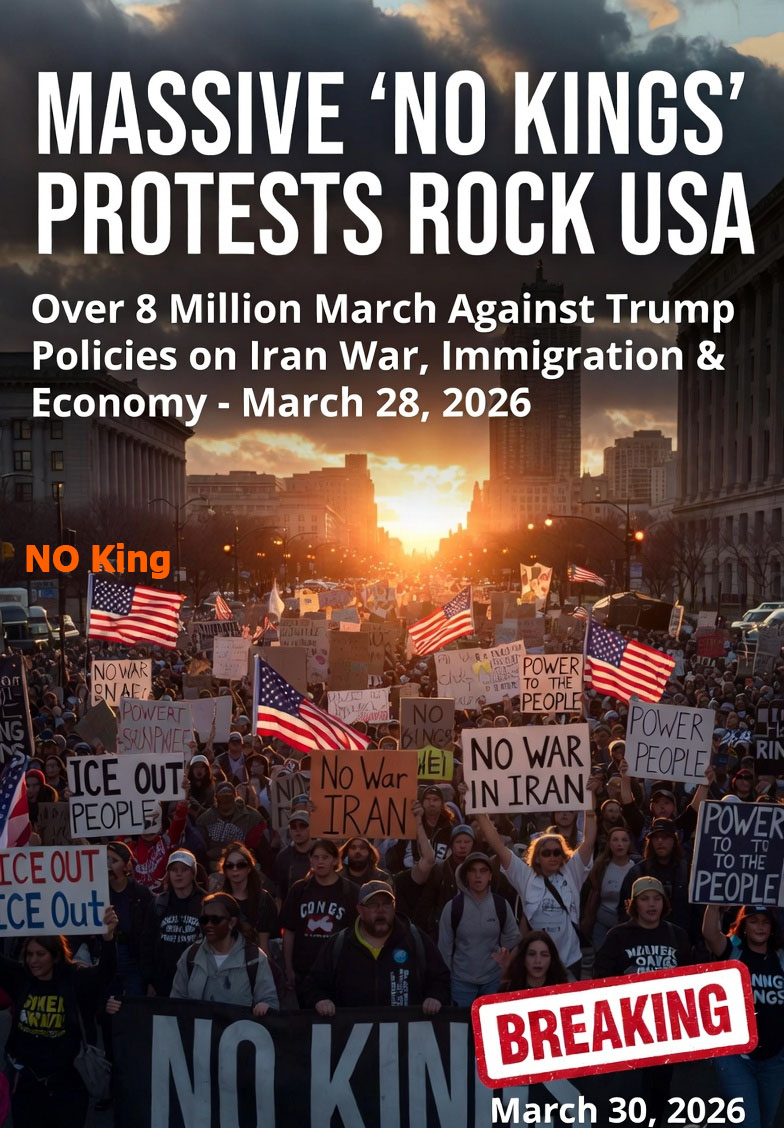
Massive Anti-Trump ‘No Kings’ Protests Rock USA: Millions Take to Streets Against Policies on Iran War, Immigration, and Economy
Washington, D.C. – March 30, 2026
In one of the largest single-day demonstrations in American history, more than 8 million people participated in over 3,300 coordinated “No Kings” rallies across all 50 U.S. states on Saturday, March 28, 2026. While the main wave of protests unfolded two days ago, the movement continues to dominate headlines and public discourse as of Monday, March 30, with ongoing debates, viral footage, and political fallout shaping the national conversation.
Organized by a coalition including progressive groups like Indivisible and the 50501 movement, along with labor unions and grassroots activists, the third round of “No Kings” protests targeted President Donald Trump’s second-term agenda. Demonstrators decried aggressive Immigration and Customs Enforcement (ICE) operations, U.S. involvement in the 2026 Iran war, rising living costs, and what organizers called “authoritarian overreach.”
Current Affairs Driving the Backlash
The protests come amid a turbulent backdrop in early 2026. The Trump administration’s hardline immigration policies have included expanded deportation raids, which critics link to several high-profile incidents involving federal agents. The ongoing conflict with Iran has strained the economy, contributing to higher fuel prices and supply chain disruptions. A partial federal government shutdown earlier in the year and the controversial handling of the Epstein files have further fueled public anger.
Protesters also pointed to broader concerns over democratic norms, voting restrictions, and climate policy rollbacks. “This isn’t just about one issue—it’s about saying no to kings,” one organizer told Reuters. “Power belongs to the people, not to any president or billionaire allies.”
A Scenario from the Ground: Inside a Typical Rally
Imagine the scene in downtown Minneapolis-St. Paul, the movement’s flagship location: Tens of thousands filled the streets around the state Capitol on a crisp March afternoon. Families with strollers marched alongside veterans, students, and union workers. Giant “No Kings” banners fluttered above the crowd. Chants of “Power to the people, not to kings!” echoed as musician Bruce Springsteen performed a special rendition of “Streets of Minneapolis,” a song written in tribute to victims of immigration enforcement incidents.
In New York City, actor Robert De Niro addressed thousands near the Lincoln Memorial replica, declaring, “Trump wants to rule over us as a tyrant. But this is America.” Similar scenes unfolded in Los Angeles, Chicago, Philadelphia, Dallas, Denver, and even small towns in rural Midwest states—proving the movement’s reach beyond coastal cities. Some rallies extended internationally to Paris, Berlin, and beyond, with participants dressed as the Statue of Liberty holding signs reading “No War, No Kings.”
Signs captured the mood: “No Kings, No Wars,” “ICE Out of Our Communities,” and “Hands Off Iran—Hands Off Our Democracy.” Police described the events as largely peaceful, with no major incidents reported despite the massive turnout. Organizers hailed it as the biggest single-day protest in U.S. history.
Reactions and Political Fallout
The White House has downplayed the protests as “Trump Derangement Therapy,” while privately monitoring the optics closely. Republican leaders, like Michigan State House Majority Floor Leader Bryan Posthumus, questioned why demonstrators targeted the current administration but not past ones for similar issues. Democrats and independents, however, viewed the turnout as a warning sign ahead of upcoming midterms.
As of March 30, social media remains flooded with videos and personal stories from the rallies. Analysts say the sustained “No Kings” movement—now in its third major wave since Trump’s 2025 inauguration—signals deep polarization but also high voter engagement on issues like foreign policy and immigration.
The protests reflect a nation grappling with division. Whether this wave translates into lasting political change remains to be seen, but one thing is clear: millions of Americans are refusing to stay silent. For live updates and eyewitness accounts, follow developments as the conversation evolves this week.