
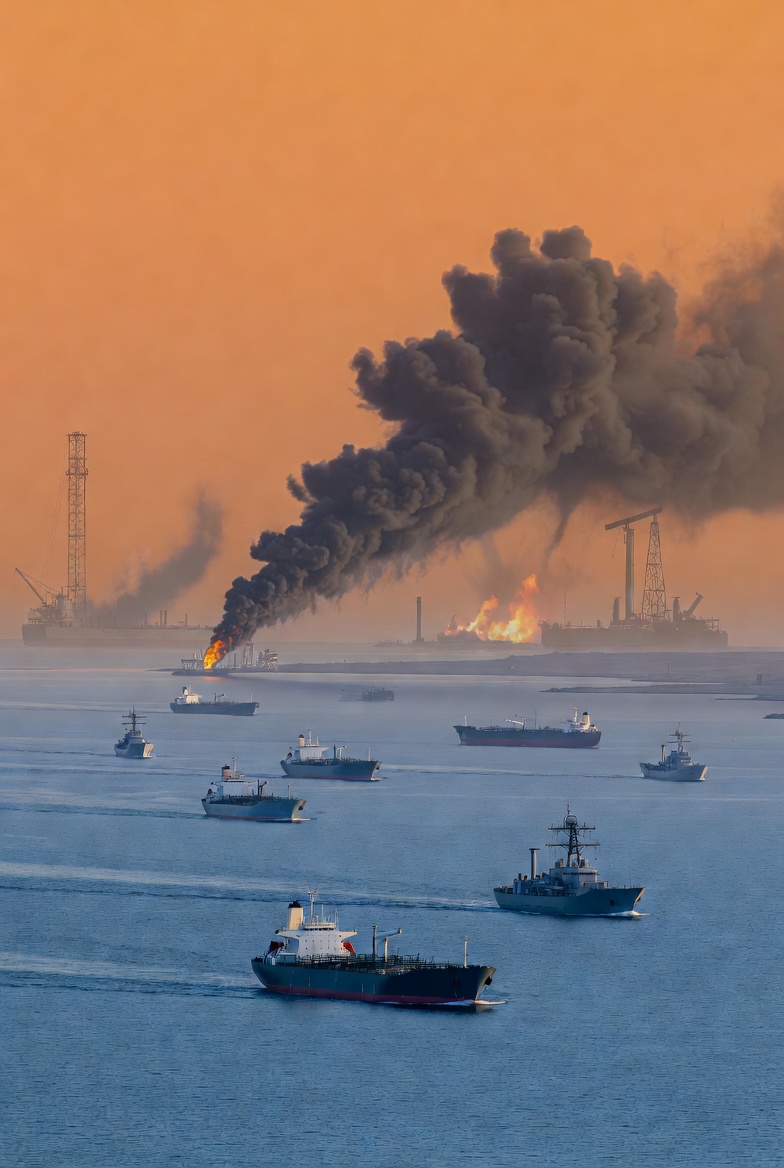
The ongoing 2026 US-Iran conflict, with strikes on Kharg Island and threats to the Strait of Hormuz, echoes several past oil-related crises. These events highlight how attacks on oil terminals, tanker routes, and chokepoints can trigger global energy shocks, price spikes, and military escalations. Here are the most relevant parallels:
1. The Tanker War (1984–1988) – Iran-Iraq War
The closest historical match. During the Iran-Iraq War, Iraq repeatedly bombed Iran’s Kharg Island oil terminal (Iran’s main export hub, just like today). Iran retaliated by attacking oil tankers and laying mines in the Strait of Hormuz.
- Over 450 ships were hit.
- Oil shipments through Hormuz dropped sharply.
- The US launched Operation Earnest Will, reflagging and escorting tankers with warships — exactly the kind of allied naval deployment Trump is now urging. This phase turned the Persian Gulf into a war zone, disrupted global oil supplies, and caused major price volatility.
2. Gulf War (1990–1991) – Iraq’s Invasion of Kuwait
Iraq seized Kuwait’s oil fields, then set hundreds of wells on fire as coalition forces advanced. The goal was to control or deny oil resources.
- Global oil prices doubled almost overnight.
- The world saw the danger of one actor weaponising oil infrastructure.
- A US-led coalition intervened to secure the flow of oil — similar to current concerns over Hormuz and allied warship deployments.
3. 2019 Persian Gulf Tanker Crisis
Iran (or Iran-backed forces) was blamed for sabotaging and seizing multiple oil tankers near the Strait of Hormuz and Gulf of Oman.
- Oil prices jumped 4–5% in days.
- The US accused Iran of using mines and speedboats — tactics now seen again in 2026.
- This mini-crisis showed how even limited attacks on shipping can freeze insurance markets and halt tanker traffic without a full war.
4. Other Notable Parallels
- 1973 Oil Embargo (Yom Kippur War): Arab nations cut oil supplies, causing the first global energy crisis and long-term price shocks.
- Houthi attacks on Saudi facilities (2019) and Red Sea shipping (2023–2025): Drone and missile strikes on oil infrastructure and tankers proved modern asymmetric tactics can disrupt global energy flows with low-cost weapons.
Why these matter now Every past conflict shows the same pattern: targeting Kharg-style terminals or the Hormuz chokepoint (which carries ~20% of world oil) quickly leads to higher energy prices, stranded tankers, and the risk of wider war. The 1980s Tanker War is especially relevant — it proves that even sparing the actual oil loading platforms (as the US has done so far in 2026) does not stop escalation if shipping is blocked.