The World Teetering on the Brink of War
Today, the entire world seems poised on the threshold of an unknown and terrifying war. In the hearts of ordinary citizens, a painful question echoes relentlessly: How could we place such blind faith in those we recently voted into power? The realization that the very leaders we elected are now steering the globe toward destruction weighs heavily on many minds. Yet, there is also a lingering sense that this awakening has come too late.
Democracy stands on the fragile foundation of trust. Citizens entrust power to their representatives, believing they will serve the good of the nation and the world. But when those same leaders gradually bring government institutions, law enforcement, and even the judicial system—the last beacon of hope—under their shadow, the common person is left utterly helpless. If the system meant to deliver justice itself falls into the grip of power, the soul of democracy hangs in peril.
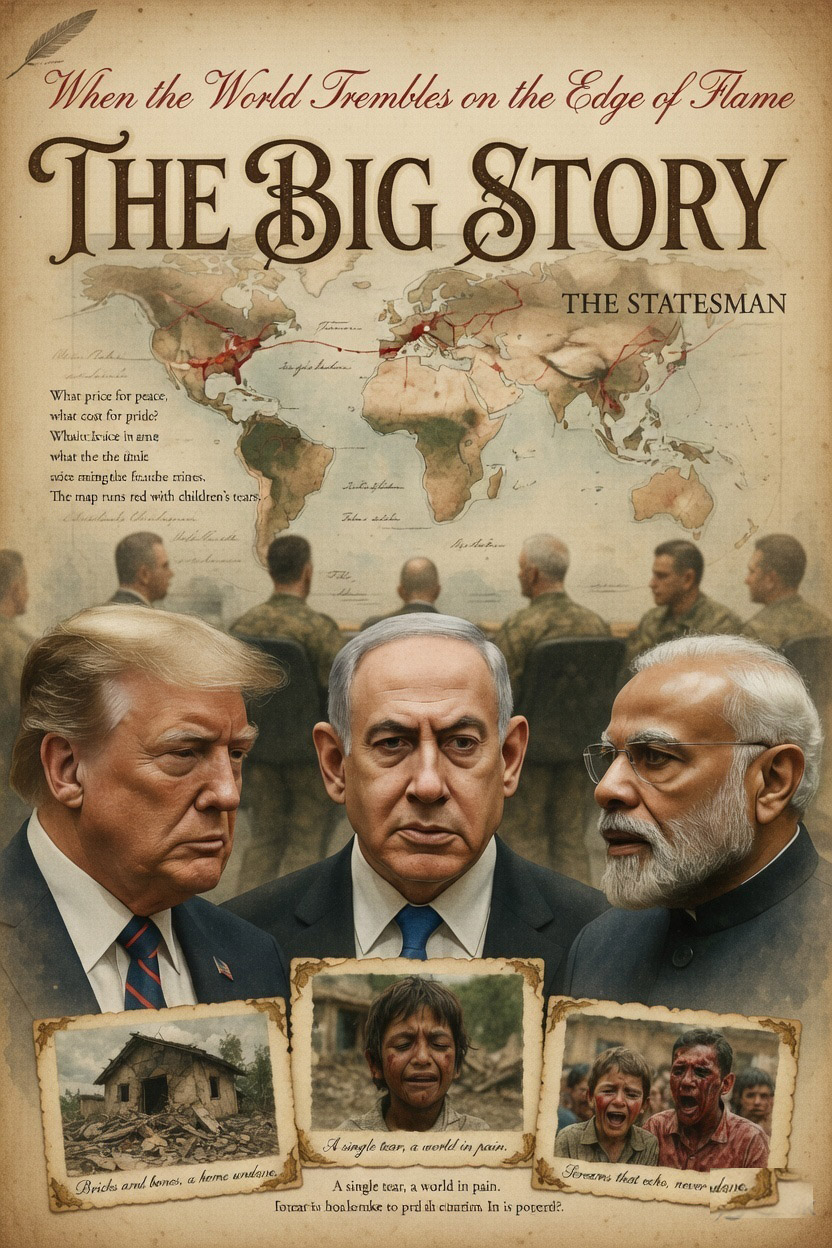
Looking at today’s global politics, this fear grips many. The world watches with growing anxiety as political maneuvers unfold in countries like the United States, Israel, and India. Since assuming office, decisions by Donald Trump have sparked widespread discussions about rising international tensions. Trade policies, tariffs, and mounting pressure on smaller nations are fueling fears of instability in the global economy.
At the same time, actions under Benjamin Netanyahu’s leadership in Israel have heightened strains in the Middle East. From the wounds of the Gaza Strip to the brewing storm around Iran, the escalating conflicts signal the ominous prelude to a larger war for many observers. There is a prevailing sentiment that some nations, despite their desire for peace, are being inexorably drawn into this vortex of strife.
In the shadow of this looming war, another grave conversation reverberates across the globe. The infamous Jeffrey Epstein case and the so-called “Epstein files” continue to raise unanswered questions. Among some people, suspicions linger that the names of influential figures may be entangled in this affair. As a result, certain citizens and analysts suggest that international political tensions and war rhetoric are sometimes used to divert public attention from such sensitive matters.
Surveys and social discussions in the United States echo this view: major political controversies, the language of conflict, or international disputes can occasionally serve as tools to shift focus elsewhere. In these conversations, Donald Trump’s name often arises, while others raise questions about global leaders like Narendra Modi or Benjamin Netanyahu, offering varied interpretations. However, the truth of these matters remains unclear and unresolved.
Yet, these suspicions, rumors, and political debates breed their own unease. For when trust erodes, societies descend into an atmosphere of fear and doubt.
Meanwhile, the true cost of war falls squarely on ordinary people. Behind every bomb blast lie shattered homes, weeping children, and families scarred for life. The price of leaders’ decisions is paid not just by soldiers on the front lines, but by innocent civilians in distant villages.
What the world needs most today is not a display of power, but an embrace of humanity. In the race for borders, resources, and dominance, if compassion itself is lost, who truly wins—and who loses?
History has repeatedly shown: Wars end, but their wounds live on, generation after generation.