Power, Pride, and Catastrophe: A Factual Analysis of Rulers Linked to Mass Suffering
Throughout history, certain rulers have wielded absolute or near-absolute power in ways that led to immense human suffering. The first seven figures in this analysis were authoritarian leaders whose regimes or conquests produced death tolls in the millions through deliberate policies of famine, purges, genocide, forced labor, and war. Scholarly estimates, drawn from demographic studies, survivor accounts, and archival records, place their responsibility for excess deaths at scales that reshaped entire societies.
By contrast, the final three are modern elected or long-serving leaders operating in the 21st century amid intense global scrutiny, independent media, international law, and domestic opposition. Their policies and decisions have been linked to significant loss of life in ongoing or recent conflicts, but the numbers and mechanisms differ fundamentally from the industrialized extermination or engineered famines of the 20th century. These cases remain deeply contested, with sharp divides between critics who emphasize humanitarian costs and supporters who stress security imperatives or national interests. No credible demographic analysis equates their impact to the multi-decade totalitarian death machines of the past.
1. Adolf Hitler (Germany, 1933–1945)
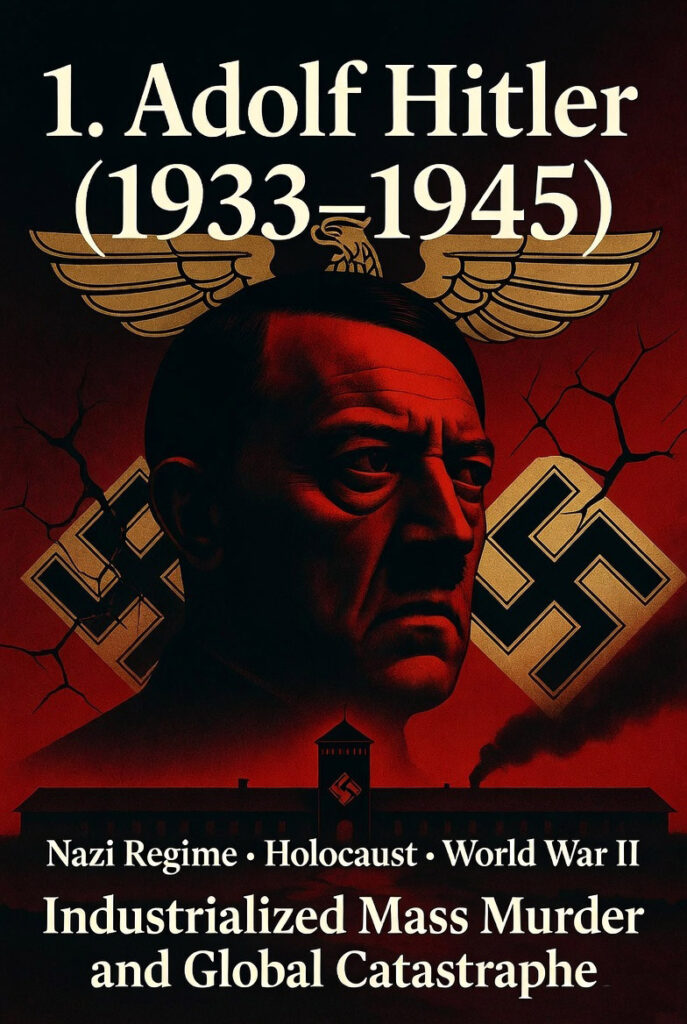
Hitler’s Nazi regime fused racial ideology, propaganda, and bureaucratic efficiency into a program of systematic extermination and aggressive war. His belief in Aryan supremacy and the need for “Lebensraum” (living space) drove the Holocaust and World War II. The Nuremberg Laws of 1935 stripped Jews of rights, paving the way for ghettos, mass shootings, and death camps like Auschwitz-Birkenau, where gas chambers and forced labor killed approximately 6 million Jews and 5–11 million others (Roma, disabled people, Poles, Soviet POWs, and political dissidents). Hitler’s invasion of Poland in 1939 ignited a global conflict that caused 70–85 million total deaths. His refusal to surrender, even as Berlin fell, prolonged the agony. This era shows how a leader’s ideological obsession and centralized control can industrialize mass murder.
2. Joseph Stalin (USSR, 1924–1953)
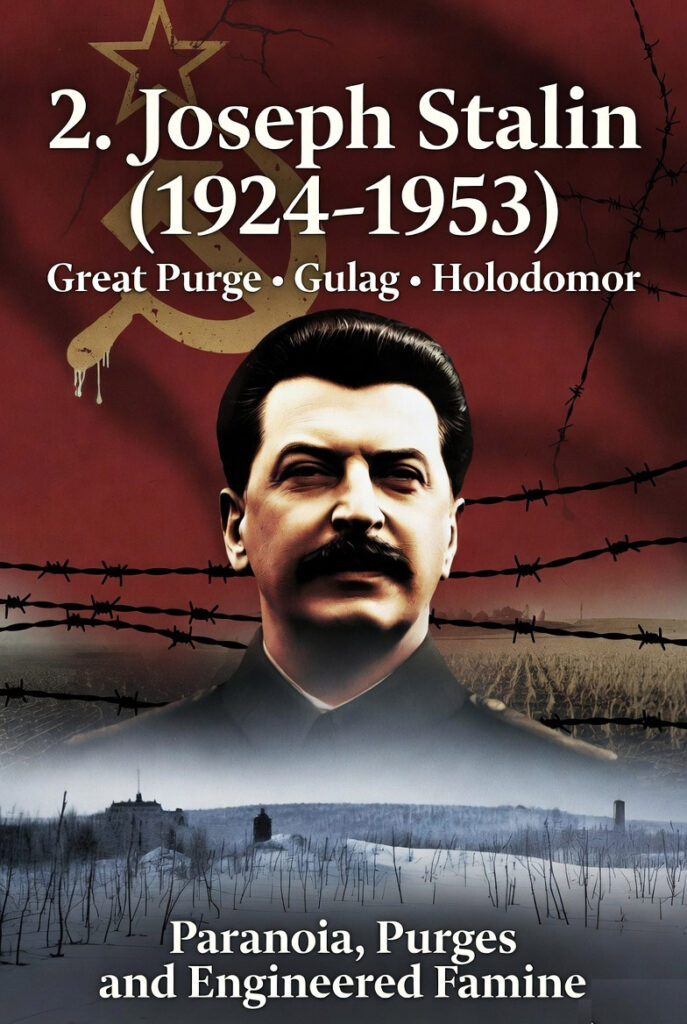
Stalin transformed the Soviet Union into a totalitarian state through paranoia-fueled purges and forced economic restructuring. The Great Purge (1936–1938) executed or imprisoned hundreds of thousands, including top military officers, weakening the country on the eve of war. The Gulag forced-labor system claimed millions more lives through starvation, exposure, and overwork. Most devastating was collectivization, which triggered the Holodomor in Ukraine (1932–1933), killing an estimated 3–5 million through deliberate grain seizures and border blockades. Overall scholarly estimates attribute 10–20 million deaths (or higher in some analyses) to Stalin’s policies of execution, famine, and deportation. His rule exemplified how fear, surveillance, and ideological rigidity sustain power at catastrophic human cost.
3. Mao Zedong (China, 1949–1976)
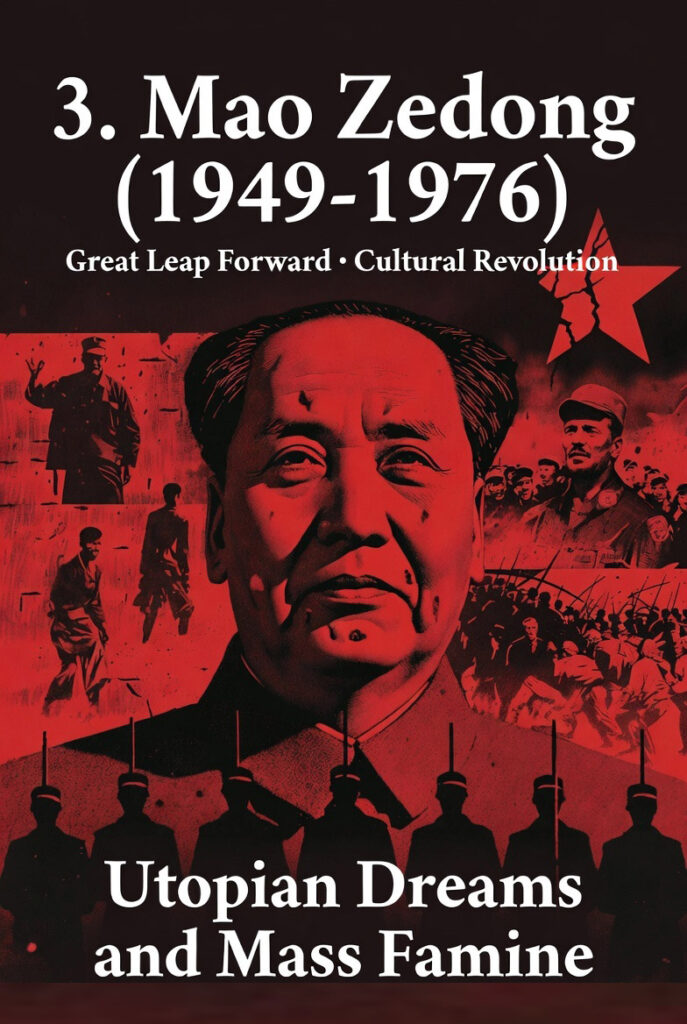
Mao’s vision of rapid communist transformation produced two of history’s deadliest policy disasters. The Great Leap Forward (1958–1962) aimed to industrialize China overnight through backyard furnaces and collective farms. Unrealistic quotas, falsified reports, and suppression of bad news led to the deadliest famine in recorded history, with excess deaths estimated at 15–55 million (most analyses center on 30–45 million). The Cultural Revolution (1966–1976) then unleashed Red Guard youth militias against “class enemies,” resulting in widespread beatings, public humiliations, and chaos that killed 1–2 million more while destroying cultural heritage and social trust. Mao’s era illustrates the dangers of utopian ideology enforced through absolute obedience and punishment of dissent.
4. Pol Pot (Cambodia, 1975–1979)
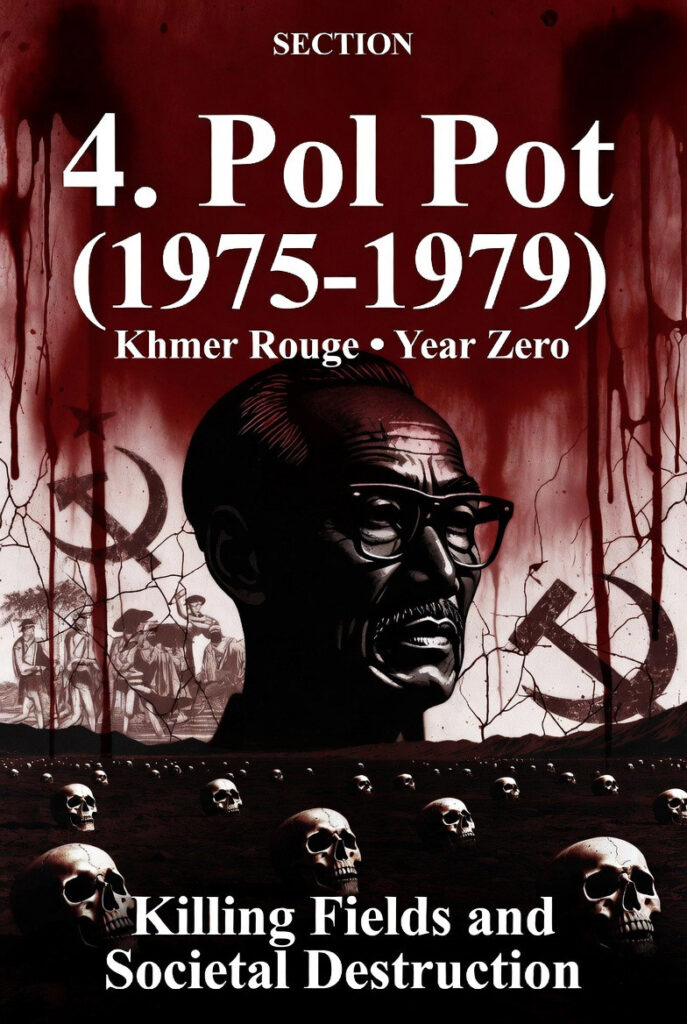
Pol Pot and the Khmer Rouge sought to reset society to “Year Zero” by abolishing cities, money, and education in pursuit of a pure agrarian communism. Urban populations were marched into the countryside at gunpoint. Anyone deemed intellectual—teachers, doctors, even those wearing glasses—was executed. Families were split, religion banned, and labor camps became death traps. Roughly 1.5–2 million people (about 25% of Cambodia’s population) perished from execution, starvation, disease, and overwork in the infamous Killing Fields. Pol Pot’s radical experiment collapsed after Vietnam’s invasion, but its speed and totality mark it as one of the most extreme cases of ideological zealotry leading to societal self-destruction.
5. Kim Il-sung (North Korea, 1948–1994)
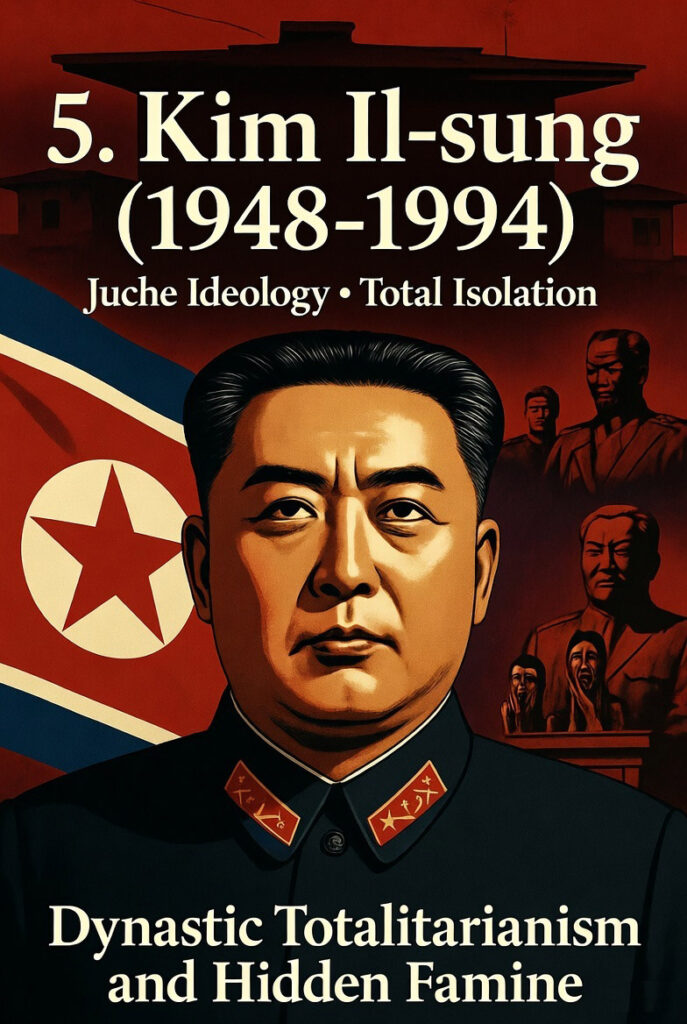
Kim Il-sung founded a hereditary totalitarian dynasty built on Juche (self-reliance) ideology, total information control, and generational punishment for dissent. The regime isolated citizens completely, turning the state into a personality cult. While the catastrophic 1990s famine occurred primarily under his son Kim Jong-il, it stemmed directly from the rigid central planning and militarized economy Kim Il-sung established. Hundreds of thousands died in that famine, and the system he created has sustained political imprisonment, public executions, and chronic malnutrition for decades. His legacy is a state where control over reality itself became the ultimate tool of survival.
6. Idi Amin (Uganda, 1971–1979)
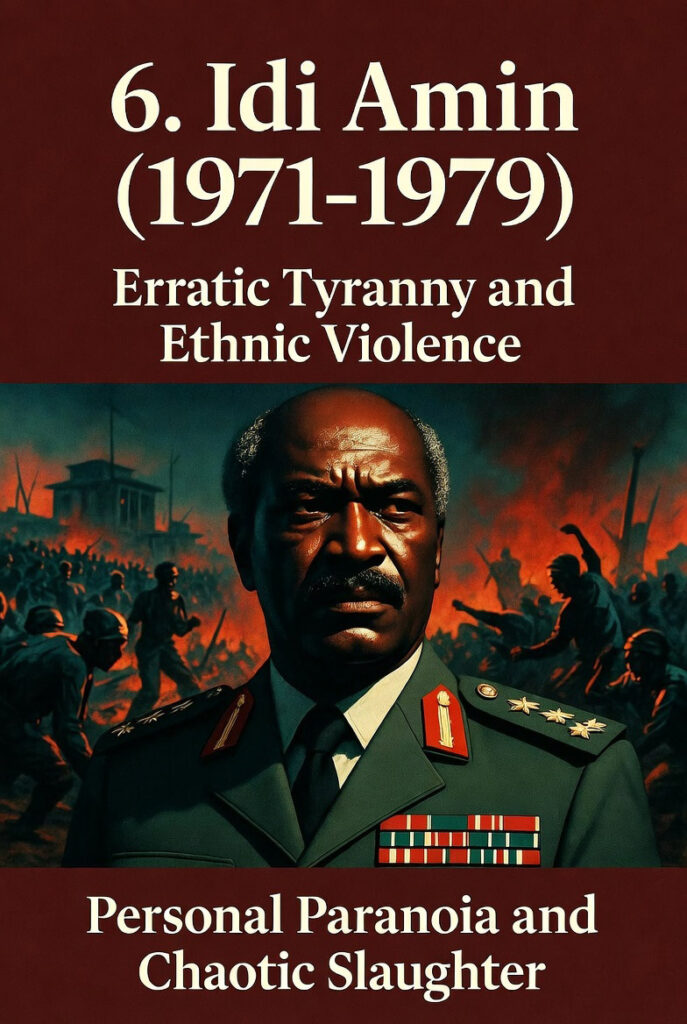
Idi Amin’s eight-year rule was defined by erratic violence, ethnic favoritism, and economic ruin rather than coherent ideology. He expelled Uganda’s Asian minority (tens of thousands), collapsing the commercial economy. Political opponents, ethnic rivals, and suspected disloyalists faced torture and murder in prisons like the State Research Bureau. Estimates of deaths range from 100,000 to 500,000. Amin’s regime lacked the bureaucratic machinery of larger totalitarian states but showcased how personal paranoia and unrestrained power can produce chaotic, widespread slaughter.
7. Saddam Hussein (Iraq, 1979–2003)
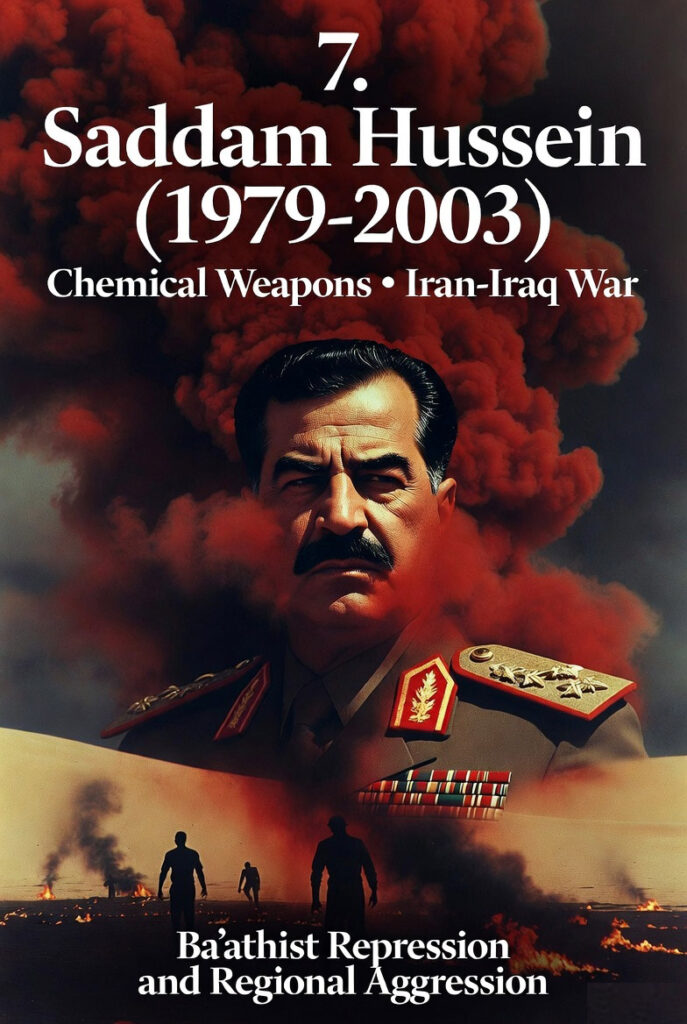
Saddam ruled through a Ba’athist police state of surveillance, chemical weapons, and brutal suppression. The Anfal campaign (1986–1989) used poison gas against Kurds, killing tens of thousands in Halabja alone. The Iran-Iraq War (1980–1988), which he initiated, caused roughly 1 million total deaths. His 1990 invasion of Kuwait triggered the Gulf War and subsequent sanctions. Internal uprisings after 1991 were crushed with mass executions and mass graves. Saddam’s reign combined foreign aggression with domestic terror, demonstrating how authoritarian control can fuel both regional wars and internal atrocities.
Modern Leaders:
Complex and Contested Legacies
8. Vladimir Putin (Russia, 2000–present)
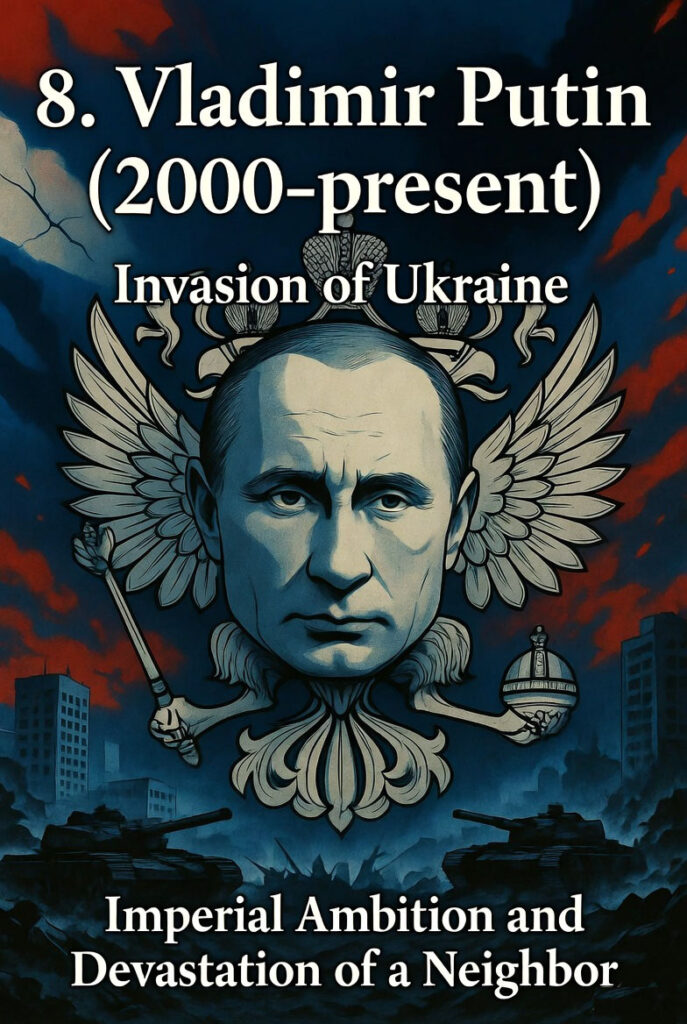
Vladimir Putin’s full-scale military invasion of Ukraine, launched on February 24, 2022, stands as one of the most significant acts of aggression in 21st-century Europe. Critics argue that this war exemplifies a ruthless leader’s willingness to sacrifice innocent lives to satisfy imperial ambitions and personal power. By targeting a militarily weaker sovereign nation, Putin has earned a place in many contemporary assessments as the 8th most ruthless ruler in history’s broader list of leaders linked to mass suffering. This ranking places him after the 20th-century totalitarian giants but ahead of several other modern authoritarian figures due to the scale of deliberate devastation inflicted on Ukraine and the threat his policies pose to smaller neighboring countries.
At the outset, Ukraine was significantly weaker than Russia in conventional military power. Putin’s regime launched a multi-axis assault aimed at toppling the Ukrainian government and seizing territory. The outcome has been the systematic devastation of cities like Mariupol, Bakhmut, and Avdiivka through heavy bombardment and indiscriminate strikes on civilian infrastructure.
As of April 2026, the human cost is tragically high: The UN has verified over 15,000 civilian fatalities (with the true number likely higher). Combined Russian and Ukrainian military casualties (killed and wounded) are estimated between 1.8 and 2 million, with Russia suffering the heavier burden (roughly 1–1.3 million casualties). These losses stem from a war of choice by a nuclear superpower against a neighbor seeking closer Western ties.
Putin’s actions reflect revanchist ideology and false pride in restoring “Russian greatness.” Documented atrocities in occupied areas, forced deportations, and an ICC arrest warrant highlight the indifference to civilian suffering. The invasion has also created millions of refugees and set a dangerous precedent for larger powers attacking weaker neighbors. While supporters claim it counters NATO expansion, the aggression remains widely viewed as unprovoked. Putin ranks 8th because his war caused unprecedented death and destruction in Europe since World War II, linked directly to his personal decisions and imperial ambitions.
9. Benjamin Netanyahu (Israel, multiple terms)
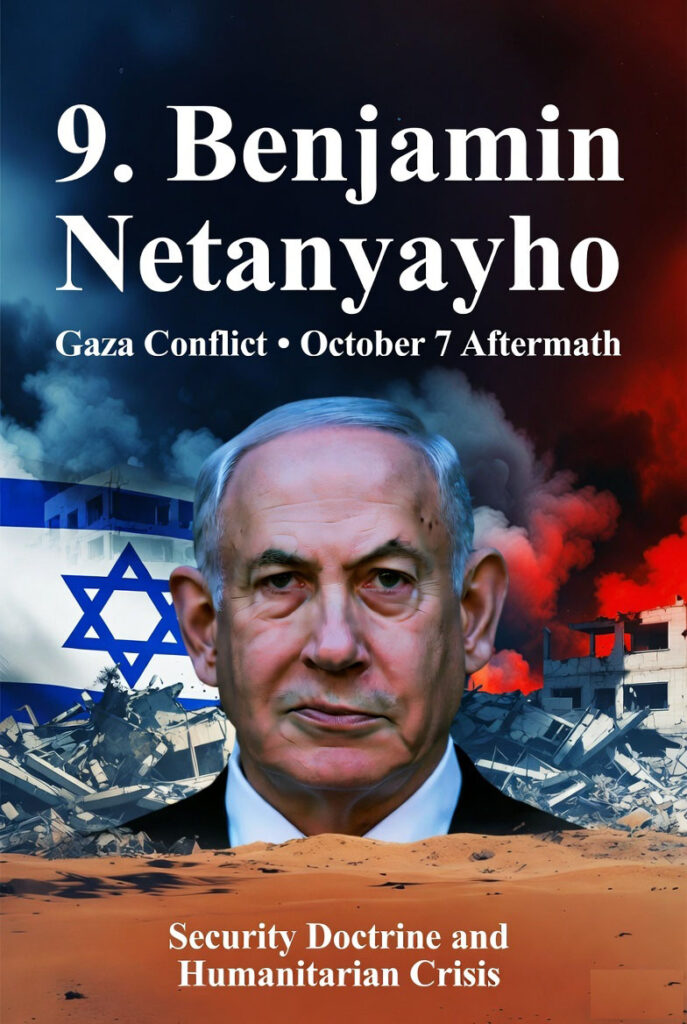
Benjamin Netanyahu, Israel’s longest-serving Prime Minister, has led the country through intense periods of the Israeli-Palestinian conflict. His leadership during the war following the October 7, 2023, Hamas attacks has drawn sharp international criticism for the scale of civilian suffering in Gaza. Critics argue his security policies reflect a ruthless prioritization of military objectives and political survival. In many assessments, Netanyahu ranks 9th among rulers linked to mass suffering—after historical totalitarians and Putin—due to the humanitarian impact in a densely populated territory. This ranking recognizes the tragic loss of life while noting the context of a defensive response to terrorism rather than unprovoked conquest.
On October 7, 2023, Hamas killed approximately 1,200 people (mostly civilians) and took over 240 hostages in brutal attacks. Israel responded with a large-scale campaign to destroy Hamas’s capabilities. Gaza authorities report over 72,000 Palestinian deaths as of April 2026, with some independent studies estimating violent deaths around 75,000 (including undercounts). The fighting caused immense destruction, displacement, and a humanitarian crisis. A ceasefire took effect in late 2025, though sporadic incidents continued.
Netanyahu’s pre-emptive security doctrine emphasizes strength against groups like Hamas. Critics accuse his government of disproportionate force and insufficient regard for civilian protection. Supporters stress that Hamas embeds among civilians and bears primary responsibility for endangering its own population. The ICC has issued warrants related to the conduct of the war (which Israel rejects). Netanyahu ranks 9th due to the significant civilian toll and global perception of policies exacerbating suffering, though the deaths occurred in urban warfare against a terrorist group following a direct massacre. The case remains highly contested, highlighting the complexities of asymmetric conflict.
10. Donald Trump (United States, 2017–2021 and 2025–present)